

 Offline/Online Class
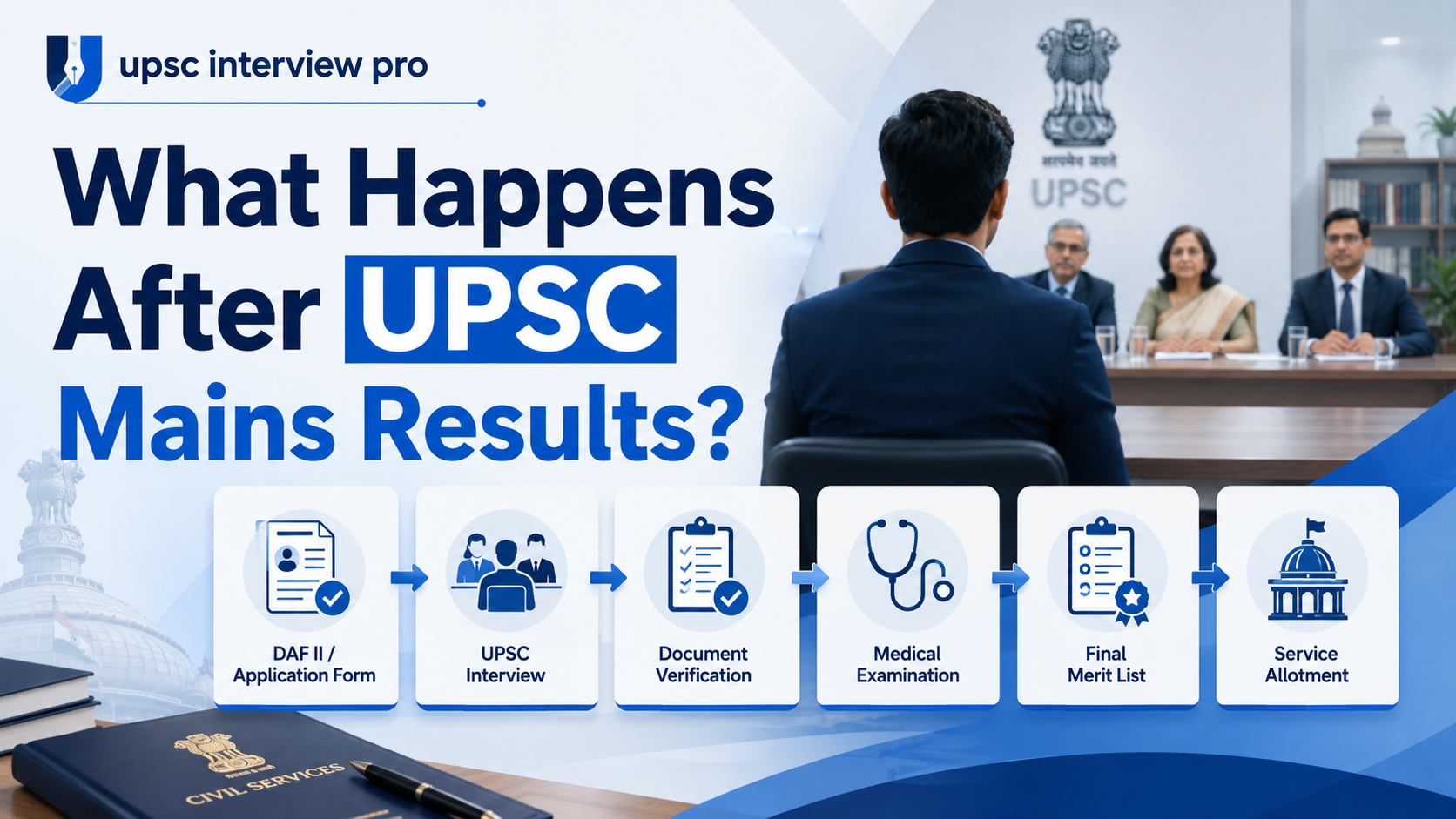
The UPSC Mains result is one of the most decisive moments in the Civil Services Examination journey. For qualified candidates, it opens the door to the Personality Test, Detailed Application Form (DAF II), document verification, medical examination, and eventually the UPSC CSE Final Result. For those who do not qualify, it becomes a checkpoint to review strategy, improve answer writing, and prepare for the next attempt. This blog explains the steps after the UPSC Mains result and how a focused Test Series and interview preparation plan can shape the final outcome.
Know What Happens After UPSC Mains Results
After the UPSC Mains result is declared, the process moves from written evaluation to personality assessment and final selection formalities. Candidates should not treat this period casually because mistakes in forms, documents, or interview preparation can affect their final journey.
1. Release of DAF II
The first major step after qualifying UPSC Mains is the release of the Detailed Application Form (DAF II). This form includes updated personal details, educational information, service preferences, cadre preferences where applicable, achievements, work experience, and other relevant information. The interview board may ask questions from the details filled in Detailed Application Form (DAF II), so candidates must write accurate and honest information. Service preference should also be filled carefully because it can influence allocation after the UPSC CSE Final Result.
2. UPSC Interview
The UPSC Interview, officially known as the Personality Test, is the final evaluation stage. It is not a test of bookish knowledge alone. The board assesses mental alertness, clarity of thought, ethical judgment, communication ability, balance of opinion, leadership qualities, and suitability for public service. A candidate should revise the Detailed Application Form (DAF II), optional subject basics, home state, graduation subject, current affairs, hobbies, and major national and international issues.
3. Medical Examination and Verification
After the interview stage, candidates complete medical examination and verification formalities. The purpose is to confirm that the candidate meets the required medical standards for different services. Along with this, document verification is conducted to check educational certificates, age proof, category certificates, disability certificates if applicable, and other eligibility-related documents. Candidates should keep original documents, photocopies, photographs, and required forms ready.
4. Final Merit List
The final merit list is prepared after adding UPSC Mains marks and Personality Test marks. A strong UPSC Mains score gives a base, but a confident interview performance can improve the final rank. The UPSC CSE Final Result contains the list of recommended candidates and their ranks. After this result, candidates can check marks and understand how written and interview scores contributed to the final outcome.
5. Service Allotment
Service allotment is generally done on the basis of rank, category, vacancy, medical fitness, and service preferences submitted by the candidate. Popular services include IAS, IPS, IFS, IRS and other Group A and Group B services. Detailed Application Form (DAF II) preferences are not just formal entries; they can directly affect the service finally received. Aspirants should understand job profile, field exposure, lifestyle, and long-term interest before filling preferences.
What to do After the UPSC Mains Result, If Qualified?
Qualifying UPSC Mains is a major achievement, but the preparation should immediately shift from written answers to personality-based readiness.
1. Fill Out the Detailed Application Form (DAF-II)
Read every instruction carefully before submitting the Detailed Application Form (DAF II). Do not rush service preference, cadre preference, achievements, hobbies, or employment details. Keep answers realistic because the interview board may frame questions from any entry. Review the form multiple times before final submission.
2. Prepare for the Personality Test/Interview
Start with your Detailed Application Form (DAF II). Prepare questions on your name, district, state, education, optional subject, work experience, hobbies, and current issues. Read newspapers regularly and practice speaking answers in a structured way. A good UPSC Interview Pro programme or mock interview panel can help identify weak areas such as long answers, poor eye contact, or unbalanced opinions.
3. Document Verification
Make a folder containing marksheets, degree certificate, identity proof, category certificate, EWS/OBC/PwBD documents if applicable, photographs, and other required papers. Also keep scanned copies ready. Verification becomes smoother when documents are arranged properly before the interview date.
What to Do After the UPSC Mains Result, If Not Qualified?
Not qualifying UPSC Mains is painful, but it is not the end of the UPSC journey. The next decision should be based on analysis, not emotion.
1. Take Your Time to Think
Give yourself a short break to process the result. Avoid comparing your journey with others. A calm mind helps you decide whether to continue, change optional strategy, join a Test Series, or restructure your preparation schedule.
2. Analyze Your Performance
Check where the attempt went wrong. Was it poor answer writing, weak content, lack of revision, optional subject gaps, slow speed, or limited test practice? Compare your answers with model answers and topper copies. This honest review is more useful than starting the same preparation again.
3. Prepare for the Next Attempt
For the next attempt, build a plan around revision, answer writing, current affairs, optional improvement, and regular evaluation. A good UPSC Mains Test Series can improve structure, time management, introduction-conclusion quality, and content presentation. The goal should be not only to study more but to write better.
4. Stay Positive and Motivated
UPSC preparation is a long process. One result does not define your ability. Stay connected with mentors, maintain discipline, and focus on measurable improvement. If your basics are strong and your mistakes are clear, the next attempt can be much stronger.
Ready to boost your UPSC preparation? Join UPSC Interview Pro today and prepare for Detailed Application Form (DAF II), mock interviews, personality development, and final-stage guidance with a focused strategy.


