

 Offline/Online Class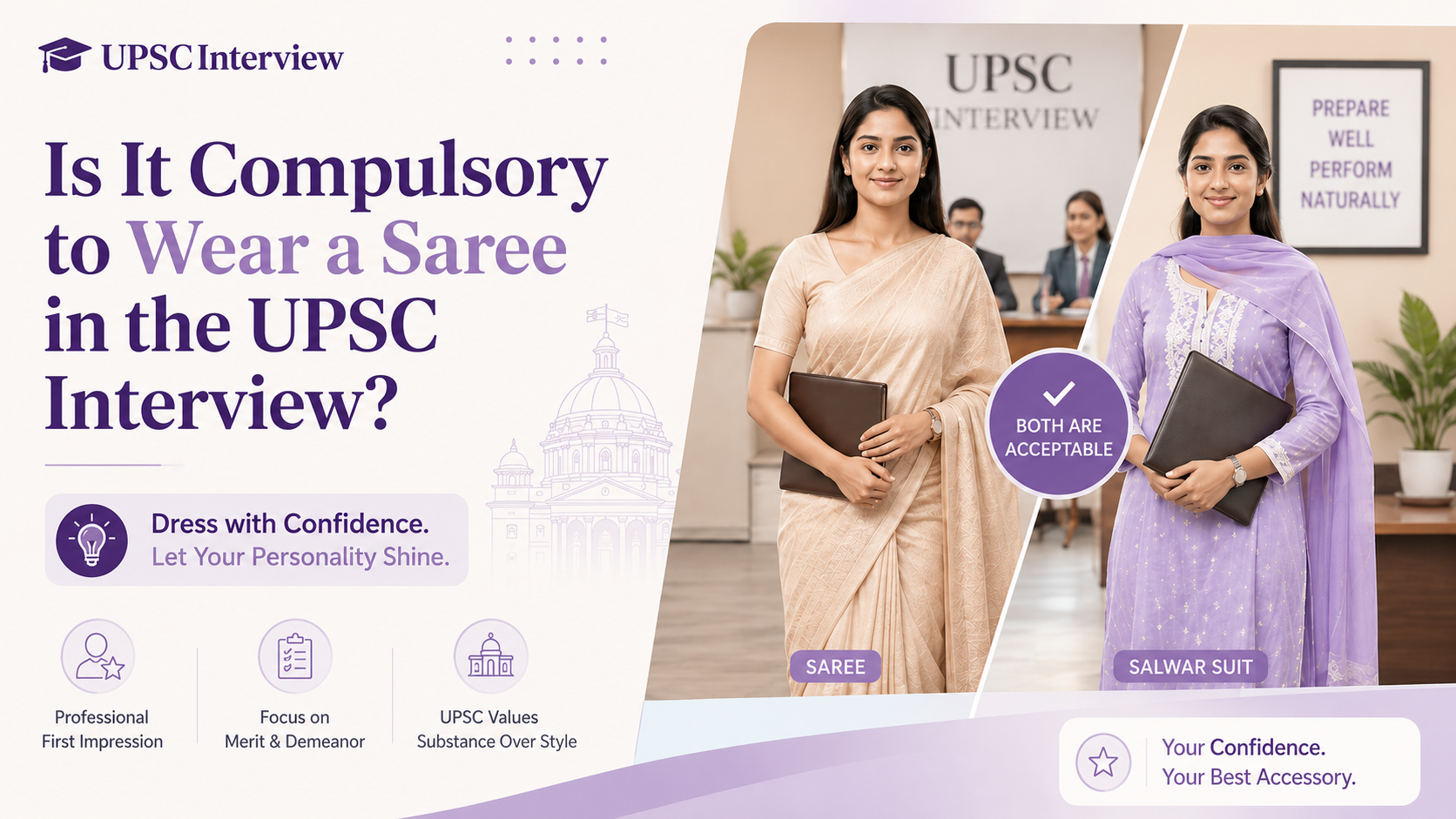
No, it is not compulsory to wear a saree in the UPSC interview. Female candidates can also wear a simple and formal salwar suit. The most important requirement is to look neat, professional, comfortable and confident.
The official UPSC instructions concerning the Personality Test explain matters such as the interview medium and required documents, but they do not prescribe a saree as compulsory attire. Therefore, candidates should not treat a commonly followed dressing convention as an official rule.
Why Do Many Female Candidates Wear a Saree?
Many candidates choose a saree because it is considered traditional, dignified and suitable for a formal occasion. It is also commonly seen in UPSC interview photographs and mock interview videos.
However, popularity does not make it mandatory. Wearing a saree will not provide any special advantage if the candidate is uncomfortable, distracted or unable to carry it naturally.
The purpose of interview attire is to support a professional appearance. It should not become an additional source of stress.
Can a Female Candidate Wear a Salwar Suit?
Yes, a salwar suit is an appropriate choice for the UPSC interview. Leading UPSC preparation platforms also recognise a simple salwar suit as a suitable alternative for candidates who are not comfortable wearing a saree.
A suitable salwar suit should be:
- Simple and well-fitted
- Properly ironed and clean
- Made from comfortable fabric
- Light or sober in colour
- Free from heavy embroidery or glitter
- Worn with a neatly arranged dupatta
A salwar suit may be the better option when you wear it regularly and can sit, walk and speak comfortably in it.
Saree or Salwar Suit: Which Is Better?
The right choice depends on your comfort, familiarity and ability to maintain a professional appearance.
Choose a saree when:
- You are accustomed to wearing one
- You can manage it without repeated adjustment
- You feel confident while walking and sitting in it
- The fabric and draping remain comfortable for several hours
Choose a salwar suit when:
- You rarely wear sarees
- You feel more natural in a suit
- You want greater freedom of movement
- Managing the saree may distract you during the interview
During UPSC interview preparation, candidates should select an outfit that allows them to concentrate completely on the questions rather than on their clothing.
Type of Saree Is Suitable for the UPSC Interview
Candidates choosing a saree should prefer a simple design in a sober colour. Cotton, cotton-silk, khadi or another comfortable and non-slippery fabric can be considered.
The saree should be:
- Properly ironed and neatly draped
- Securely pinned where required
- Free from loud prints and heavy decoration
- Paired with a simple, comfortable blouse
- Easy to manage while walking and sitting
Cotton or khadi may be practical choices, but there is no official rule requiring a particular fabric. Comfort and professional presentation matter more than following an unofficial formula.
Female Candidates Avoid Wearing
The outfit should not attract more attention than the candidate’s personality and responses. Avoid:
- Very bright or fluorescent colours
- Heavy embroidery, sequins or glitter
- Excessive jewellery or noisy bangles
- Uncomfortable footwear
- Strong perfume
- Heavy makeup
- Poorly fitted or transparent clothing
- Casual clothes such as jeans or T-shirts
Simple grooming, tidy hair, clean footwear and minimal accessories are sufficient.
Wearing a Saree Improve UPSC Interview Marks
No particular outfit can improve interview marks by itself. A saree does not indicate greater seriousness, maturity or administrative suitability than a formal salwar suit.
Your dress only contributes to your overall presentation. The interview board is primarily interested in how you think, communicate and respond to different issues. Your knowledge, judgement, honesty, clarity and composure remain far more important than your choice between a saree and a salwar suit.
An expensive saree is also unnecessary. A simple, clean and comfortable outfit can create a more professional impression than an elaborate outfit that makes you self-conscious.
Test Your Outfit During a UPSC Mock Interview
Do not wear your selected outfit for the first time on the final interview day. Use it during at least one UPSC mock interview.
While practising, check whether:
- You can sit with correct posture
- The saree or dupatta remains properly arranged
- Your footwear is comfortable
- You can enter and leave the room naturally
- You can handle your documents easily
- You feel confident rather than conscious of your appearance
This practical check is an important part of UPSC interview preparation because even a suitable outfit can become distracting when it has not been tested in advance.
It is not compulsory to wear a saree in the UPSC interview. A simple and formal salwar suit is also acceptable. Choose the outfit in which you look professional and feel comfortable, confident and composed.
Also Read This –
How to Improve Communication Skills for the UPSC IAS Interview
Do not wear a saree merely because other candidates are wearing one. Your clothing should complement your personality and allow the interview board to focus on your answers, judgement and suitability for the civil services.


