

 Offline/Online Class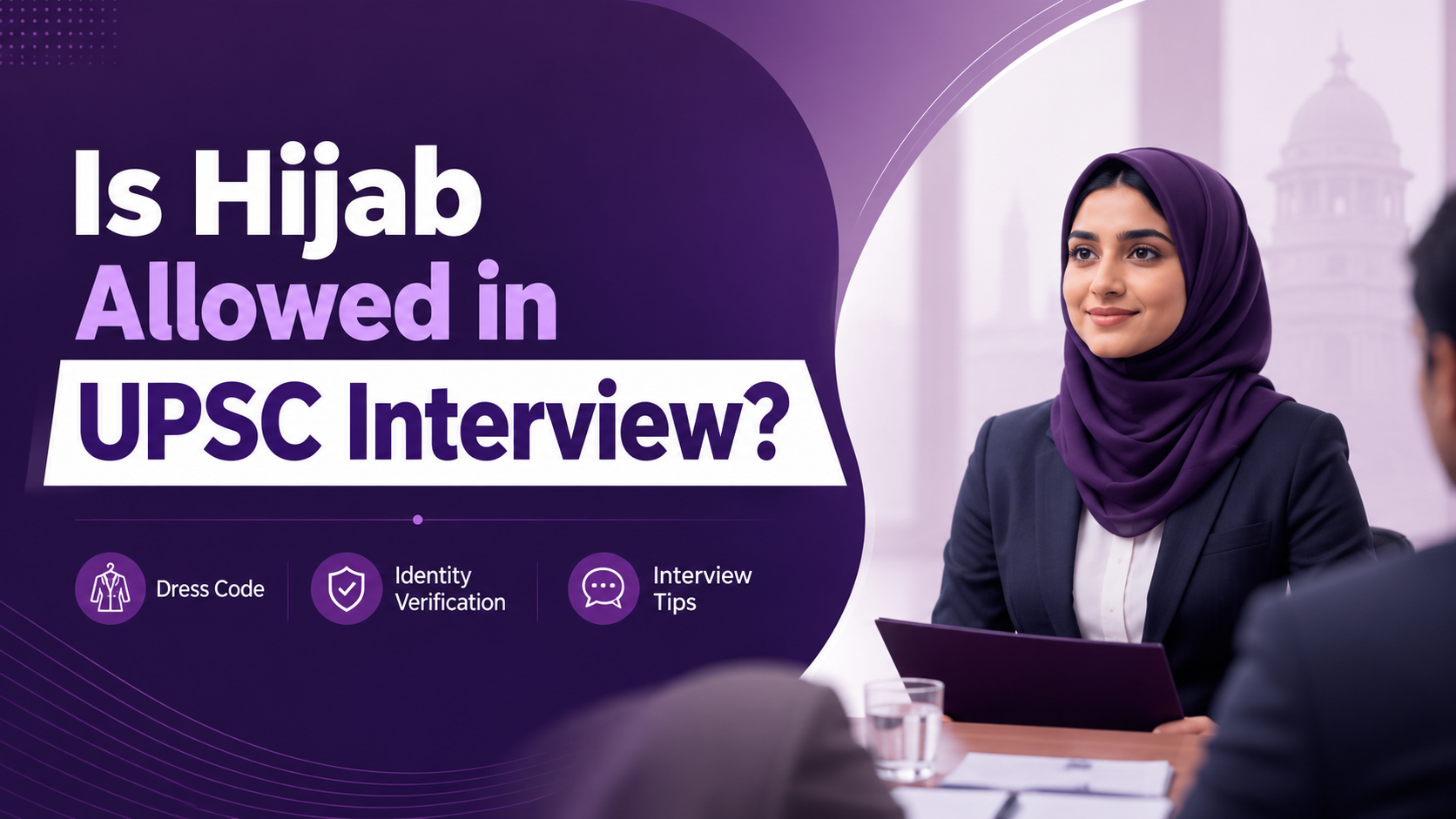
Many aspirants preparing for the UPSC interview ask one practical question: is hijab allowed in UPSC interview? The simple answer is yes, a candidate may wear hijab in the UPSC interview, but the face should remain clearly visible for identity verification and official checking. The available UPSC Civil Services Examination notification does not mention any ban on hijab. However, it clearly requires candidates to carry photo ID details and advises candidates to undergo face authentication, identity verification, and frisking at the examination venue.
The UPSC interview is not a test of fashion, religion, or personal clothing preference. It is a Personality Test meant to assess whether a candidate is suitable for a career in public service. The board evaluates mental alertness, judgement, logical expression, social traits, leadership ability, interest in current affairs, and intellectual and moral integrity.
Is Hijab Allowed in UPSC Interview?
Yes, hijab is generally allowed in the UPSC interview if it does not obstruct face verification. The candidate’s face should be clearly visible because UPSC may need to match the candidate with the uploaded photograph, live photo, admit card details, and photo ID proof.
Aspirants should understand the difference between wearing hijab and covering the face. A hijab that covers the hair and neck but keeps the full face visible should not normally create a problem. However, anything that hides the face may create difficulty during identity verification.
Therefore, the safest approach is to wear hijab in a formal and simple manner. Keep the forehead, eyes, nose, cheeks, and chin visible. Cooperate calmly during verification. This shows confidence, discipline, and respect for institutional procedure.
Female Candidates Wear for UPSC Interview
There is no need to overthink dress selection. The best dress for UPSC interview is one that looks formal, decent, comfortable, and dignified. Female candidates may wear a sari, salwar suit, formal kurta, formal abaya, blazer, or any other professional outfit. Candidates wearing hijab can choose a plain or lightly textured hijab that matches the overall dress.
Avoid very bright colours, heavy embroidery, glitter, loud prints, and party-style accessories. Neutral colours such as black, navy blue, grey, beige, cream, brown, white, and pastel shades are safe choices. The aim is to look serious and composed, not decorative.
Your dress should not become a distraction for you or for the board. If you are comfortable wearing hijab in daily life, you can wear it confidently in the UPSC interview also.
Hijab Affect UPSC Interview Marks
Hijab does not decide UPSC interview marks. Your personality, clarity, balance, and honesty matter more. The UPSC interview carries 275 marks with no minimum qualifying marks, and these marks are counted with the written Main Examination marks for final ranking.
The board is expected to judge qualities needed in civil services. These include balanced thinking, administrative maturity, communication ability, awareness, ethical understanding, and social sensitivity. A candidate who answers with confidence and calmness can create a positive impression irrespective of dress style.
Do not enter the interview room with fear that your hijab will reduce your marks. Such fear can affect your voice, eye contact, and confidence. Instead, focus on your UPSC interview preparation, DAF, current affairs, hobbies, graduation subject, optional subject, home state, and service preference.
Can the Board Ask Questions on Hijab?
Yes, it is possible, but not certain. The board may ask questions from your background, choices, identity, current issues, society, Constitution, women’s rights, secularism, personal freedom, public order, or administrative balance.
If a question on hijab is asked, answer calmly and constitutionally. Do not sound defensive, emotional, or aggressive. A good answer should show maturity.
For example, you may say:
“In public institutions, identity verification and institutional discipline are important. At the same time, personal attire should be respected if it does not obstruct verification, communication, or official procedure.”
This answer is balanced because it respects both individual choice and administrative requirements.
Prepare If You Wear Hijab
Your preparation should be practical. Wear the same style of hijab during at least one UPSC mock interview. This will help you check whether the fabric is comfortable, whether your face remains clearly visible, and whether you can sit, speak, and maintain posture naturally.
Do not try a new dress or new hijab style on the final interview day. The interview day already creates pressure. A new outfit may make you uncomfortable. Choose something you have worn before and can manage easily.
Also, keep your hijab properly pinned. Avoid adjusting it repeatedly during the interview. Repeated adjustment may break your concentration and may give an impression of nervousness.
Role of UPSC Mock Interview
A UPSC mock interview is very useful for candidates who are worried about presentation, body language, and sensitive questions. During a UPSC mock interview, you can test your dress, communication style, sitting posture, eye contact, and answer structure.
Ask the mock board to check three things: whether your face is fully visible, whether your dress looks formal, and whether your answers sound balanced. This feedback can remove unnecessary fear before the final interview.
A good mock interview should not force you to memorise artificial answers. It should help you speak naturally, think clearly, and handle unexpected questions with maturity.
Role of UPSC Interview Coaching
Good UPSC interview coaching can help aspirants refine their DAF-based preparation, current affairs understanding, communication skills, and personality presentation. It is especially useful when candidates are unsure how to answer sensitive social, religious, or constitutional questions.
The purpose of UPSC interview coaching is not to change your identity but to improve your confidence and expression. A good mentor will help you present your thoughts in a balanced, respectful, and administrative manner.
However, coaching should not make your answers mechanical. The UPSC interview is a natural, directed, and purposeful conversation, not a strict cross-examination. So, your answers should sound honest and personal, not rehearsed.
Important Documents and Verification
Before going for the UPSC interview, carefully read your e-Summon letter and official instructions. Carry the required documents, photo ID proof, photographs, certificates, and other items mentioned by UPSC.
The photo ID used in the application process should be carried during the Examination or Personality Test. UPSC mentions Aadhaar Card, Voter Card, PAN Card, Passport, Driving Licence, or any other photo ID issued by the State or Central Government as acceptable photo ID options.
If officials ask for identity verification, cooperate politely. This is a routine security process and should not be treated as a personal objection.
Common Mistakes to Avoid
Do not cover your face in a way that creates difficulty in verification. Do not wear flashy or distracting clothing. Do not choose uncomfortable fabric. Do not over-accessorise. Do not enter the room with fear about your appearance.
Most importantly, do not make hijab the centre of your interview anxiety. The board is more concerned with your suitability for civil services.
Hijab is allowed in UPSC interview as long as the face is clearly visible and the candidate follows official verification requirements. Wear it formally, keep your appearance simple, and focus on your real preparation.
Also Read This –
How to Prepare for the UPSC Interview 2026–27: DAF Strategy, Panel Insights & Must-Have Qualities
Your UPSC interview success depends on confidence, knowledge, balanced thinking, honesty, and administrative maturity. A hijab will not define your performance. Your personality, clarity, and calmness will.


