

 Offline/Online Class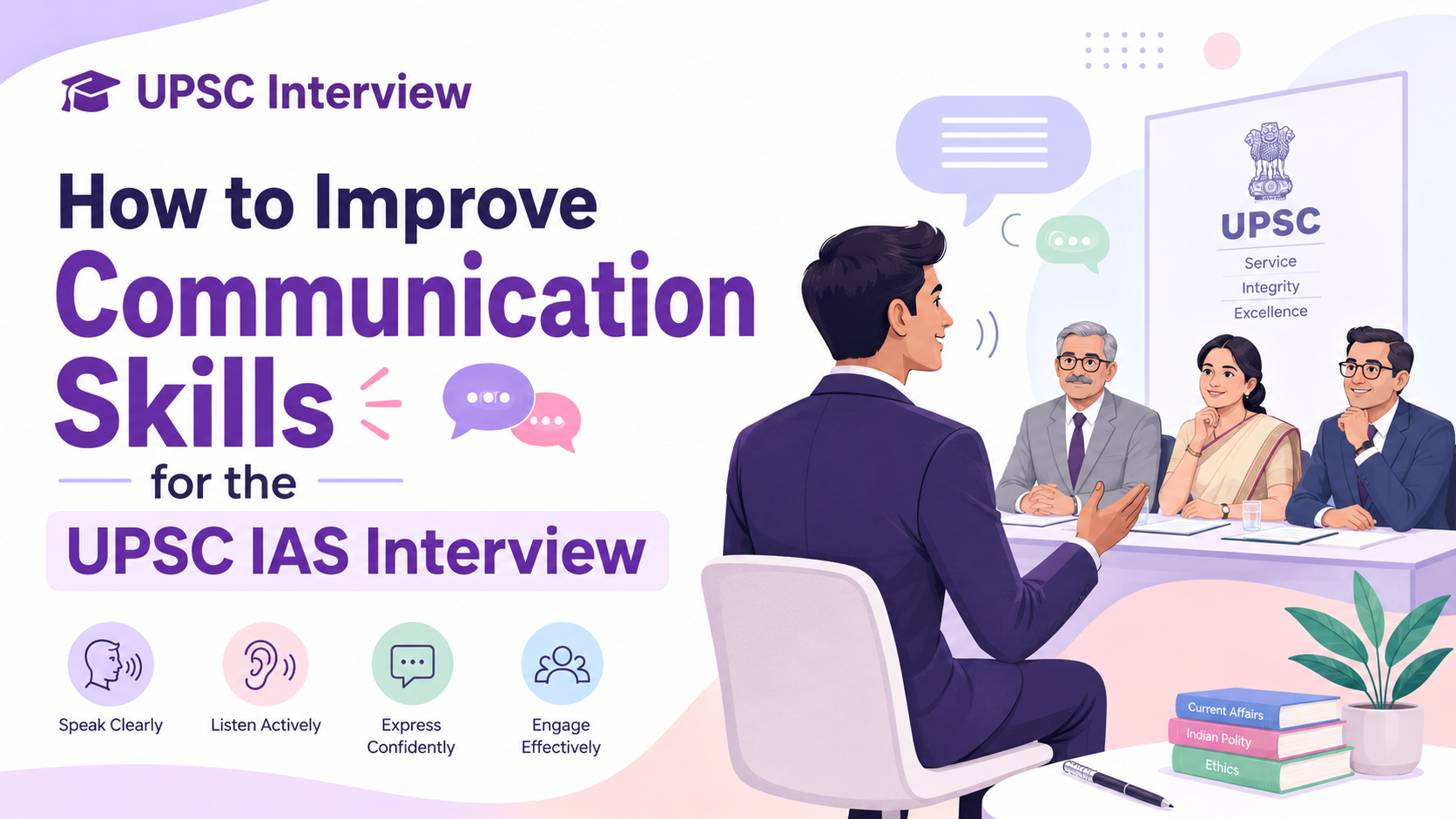
Clearing the Civil Services Main Examination proves that you possess knowledge and analytical ability. The final challenge is presenting those qualities naturally before the interview board. Strong communication in the UPSC interview does not mean complicated English, long answers. It means listening carefully, thinking logically and expressing a balanced view with confidence and honesty.
The Personality Test carries 275 marks. UPSC evaluates mental alertness, clear and logical exposition, balance of judgement, leadership, social cohesion and integrity.
Good Communication Actually Means
The board is not searching for a professional speaker. It wants a future administrator who can understand a problem, consider stakeholders, make a reasoned decision and explain it respectfully. Your answer should reveal clarity of thought, not vocabulary size.
Make Clarity Before Fluency
Many candidates try to improve speaking without improving thinking. Choose one issue daily and organise it around five questions: What is the issue? Why has it emerged? Who is affected? What are the competing viewpoints? What practical solution is possible?
Use a Flexible Answer Framework
For opinion-based questions, use the Point–Reason–Example–Balance method. State your position, explain the reason, support it with an example and acknowledge another viewpoint.
Do not force one structure into every response. Factual questions need direct answers. Ethical situations require stakeholders, options, consequences and a justified decision. Personal questions require honesty and self-awareness. Adaptability is more convincing than a rehearsed template.
Strengthen Active Listening
Communication begins with understanding the question. Do not interrupt, assume the question midway or prepare your response while the member is speaking. Identify whether the board wants a fact, opinion, comparison, justification or administrative response.
A brief pause is acceptable. When a question is ambiguous, seek clarification politely: “Sir, may I understand the question as referring to district-level implementation?” This demonstrates attention and discipline.
Ready Detailed Application Form Aloud
Your Detailed Application Form, or DAF, is the foundation of personalized questioning. Prepare your hometown, state, education, employment, hobbies, achievements, optional subject and service preferences. For every entry, develop three levels of follow-up questions.
Clarity Over Decorative Language
The UPSC interview is not an English proficiency test. Use the permitted language in which you can think and communicate accurately. Even in English, simple vocabulary and short sentences are more effective than ornamental expressions.
Improve fluency by reading an editorial paragraph aloud, summarizing it without looking, and explaining it in simpler words. Record yourself and notice fillers such as “basically,” “actually,” “like” and “you know.” Replace them with silent pauses.
Boost Voice and Body Language
Speak at a measured pace. Stress important words and pause between ideas. Excessive speed reduces clarity, while a flat voice can sound memorized.
Sit upright but relaxed. Maintain natural eye contact with the member asking the question while occasionally including others. Keep your hands controlled and avoid folded arms, restless legs or exaggerated gestures.
Also Read This –
What If I Fail in UPSC Interview?
Handle Unknown and Provocative Questions
Never bluff. When you genuinely do not know, say, “I am sorry, ma’am, I do not know.” If you remember only part of an answer, separate fact from inference: “I do not recall the exact figure, but the broader trend appears to be declining.”
When challenged, do not become defensive. Acknowledge the valid part of the counterargument, reconsider your position and respond calmly. The board may be testing composure rather than demanding agreement.
30-Day Practice Plan
During the first ten days, record two-minute answers on DAF topics and identify recurring weaknesses. During the next ten days, practice current affairs, counterquestions and ethical situations with a peer. During the final ten days, take realistic mocks, refine body language and reduce over-rehearsal.
Spend thirty minutes daily: five minutes on DAF questions, ten minutes on a current issue, five minutes on an unfamiliar question and ten minutes reviewing the recording.
Successful communication is clear thinking expressed with honesty, balance and composure. Effective UPSC interview preparation should make you more articulate without making you artificial. Through active listening, structured answers, regular recording and purposeful UPSC mock interview practice, you can present your knowledge and personality with calm confidence as a credible future civil servant.


